

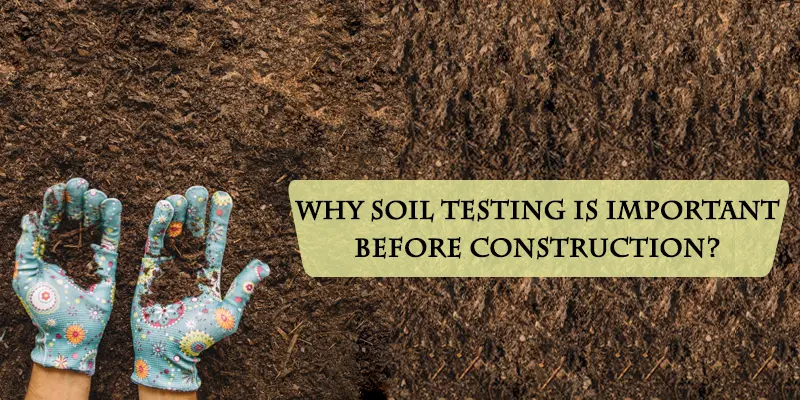
The Importance of Testing Soil Before Starting to Build
Build on a Solid Foundation – Literally
Why soil testing is the most critical step before any construction begins.
Overview
You have a vision. You have a plot. You have architectural drawings. But before a single brick is laid, there is one crucial step that many first-time builders overlook—soil testing.
The ground beneath your feet holds the key to the safety, stability, and longevity of your building. Without understanding the soil you’re building on, you risk foundation failure, structural cracks, uneven settling, and in worst-case scenarios, total collapse.
At Markman Build, we never start a project without a thorough soil investigation. Because we know that a building is only as strong as the ground it stands on.
What Is Soil Testing?
Soil testing, also known as geotechnical investigation, is the process of analyzing the physical and chemical properties of soil on a construction site. It determines:
-
Soil composition: Sand, clay, silt, gravel, or rock
-
Load-bearing capacity: How much weight the soil can support
-
Moisture content: How water affects soil stability
-
Compaction: How well the soil can be compacted for foundations
-
Expansiveness: Whether the soil swells or shrinks with moisture changes
-
Contamination: Presence of harmful chemicals or organic matter
A qualified geotechnical engineer or soil testing specialist conducts tests by drilling boreholes, extracting samples, and analyzing them in a laboratory.
Why Soil Testing Matters
| Reason | Consequence of Skipping |
|---|---|
| Foundation Design | Inappropriate foundation type leads to cracks, uneven settling, or collapse |
| Structural Safety | Unknown weak layers cause structural failure under load |
| Cost Certainty | Unexpected ground conditions lead to costly redesigns and delays |
| Durability | Expansive soils damage walls, floors, and plumbing over time |
| Regulatory Compliance | Many counties require soil test reports before issuing building permits |
| Resale Value | Undocumented soil issues reduce property value and buyer confidence |
Common Soil Types & Their Challenges
| Soil Type | Characteristics | Construction Challenges |
|---|---|---|
| Clay | Expands when wet, shrinks when dry | Causes foundation movement, cracking, and uneven settling. Requires deep foundations or soil stabilization. |
| Sand | Drains quickly, low cohesion | Can shift under load. Requires proper compaction and suitable foundation design. |
| Silt | Fine particles, moderate drainage | Susceptible to liquefaction in wet conditions. Requires careful drainage and compaction. |
| Gravel | Good drainage, high strength | Generally stable. Often suitable for shallow foundations. |
| Rock | Extremely strong, stable | Excellent for foundations but may require blasting or specialized excavation. |
| Peat / Organic Soil | Decomposed plant matter, compressible | Unsuitable for construction. Must be removed and replaced with fill material. |
| Black Cotton Soil | Highly expansive (common in Kenya) | Swells dramatically when wet, shrinks when dry. Causes severe foundation damage. Requires specialized foundations. |
The Soil Testing Process
Step 1: Site Visit & Borehole Drilling
A geotechnical engineer visits your site and drills boreholes at strategic locations. The number and depth of boreholes depend on:
-
Size of the building
-
Type of structure (single dwelling vs. multi-storey)
-
Site conditions and history
Typical borehole depth: 3–10 meters or until stable soil/rock is reached.
Step 2: Sample Collection
Soil samples are collected at various depths:
-
Disturbed samples: For classification tests (soil type, composition)
-
Undisturbed samples: For strength and compressibility tests
Step 3: Laboratory Testing
Samples are analyzed in a laboratory to determine:
-
Grain size distribution (sieve analysis)
-
Atterberg limits (plasticity, liquid limit)
-
Moisture content
-
Density and compaction characteristics
-
Shear strength
-
Compressibility and settlement potential
-
Chemical composition (sulfates, chlorides, pH)
Step 4: Analysis & Recommendations
The engineer analyzes test results and provides a Geotechnical Report that includes:
-
Soil profile and stratification
-
Recommended foundation type (strip, pad, raft, pile, etc.)
-
Safe bearing capacity (in kN/m² or t/m²)
-
Depth of foundations
-
Recommendations for drainage and waterproofing
-
Soil stabilization methods (if required)
-
Potential risks and mitigation measures
Step 5: Foundation Design
Based on the report, your structural engineer designs foundations that are appropriate for the soil conditions. This ensures your building remains stable and safe for its entire lifespan.
Types of Foundations Based on Soil Conditions
| Soil Condition | Recommended Foundation |
|---|---|
| Strong, stable soil (gravel, sand, rock) | Shallow foundations (strip footings, pad footings) |
| Moderate soil with some variability | Reinforced strip footings, ground beams |
| Weak or compressible soil | Raft foundation (spreads load across entire footprint) |
| Highly expansive clay (black cotton soil) | Deep foundations (piles or piers) reaching stable layers |
| Mixed or unpredictable conditions | Combination of ground beams and deep piles |
Real-World Consequences of Skipping Soil Testing
Case Study 1: Cracks in a Family Home
A homeowner in Ruiru built a beautiful bungalow without soil testing. Within two years, cracks appeared in walls, doors wouldn’t close properly, and floors became uneven. Investigation revealed black cotton soil that expanded and contracted with seasonal rains. The cost to underpin the foundation was nearly double the original foundation cost.
Lesson: A small investment in soil testing could have prevented massive repair costs.
Case Study 2: Commercial Building Settlement
A retail store in Kiambu experienced uneven settling within months of opening. The floor slab cracked, and walls separated. Soil testing after construction showed organic layers that had not been removed. The building had to be temporarily closed for remedial works.
Lesson: Soil testing isn’t optional—it’s essential for safety and business continuity.
Case Study 3: Successful Project with Soil Testing
A developer in Twiga Estate commissioned thorough soil testing before constructing a 4-bedroom mansion. Tests revealed variable soil conditions across the 80×80 plot. Engineers designed a reinforced raft foundation with ground beams. The house has stood firm for years with no cracks or settlement issues.
Lesson: Proper foundation design based on soil testing ensures long-term peace of mind.
Soil Testing Costs vs. Risks
| Item | Typical Cost (KSh) |
|---|---|
| Soil Testing (2–4 boreholes) | 30,000 – 100,000 |
| Geotechnical Report | Included in testing |
| Potential Cost of Skipping | |
| Foundation repairs | 200,000 – 2,000,000+ |
| Structural cracks remediation | 100,000 – 500,000 |
| Legal liability | Variable |
| Loss of property value | Significant |
| Demolition & rebuild | Millions |
Soil testing typically costs less than 1% of total construction budget but provides peace of mind and risk mitigation worth infinitely more.
Regulatory Requirements in Kenya
Many counties, including Kiambu, Nairobi, and others, now require soil test reports as part of the building permit application process.
Key regulations:
-
National Building Code 2024 emphasizes proper foundation design based on site-specific geotechnical investigations.
-
Engineers Board of Kenya (EBK) requires licensed structural engineers to consider soil conditions in foundation design.
-
Failure to conduct soil testing can result in:
-
Rejection of building plans
-
Stop-work orders
-
Legal liability in case of structural failure
-
When Should You Test Soil?
| Scenario | Recommendation |
|---|---|
| New construction on virgin land | Always test. You have no prior data on soil conditions. |
| Land with existing structures | Test to confirm soil conditions, especially if previous structures showed signs of distress. |
| Sloping sites | Essential to assess stability, drainage, and retaining wall requirements. |
| Areas with known black cotton soil | Mandatory. Black cotton soil requires specialized foundations. |
| Multi-storey buildings | Critical. Heavy loads require precise foundation design based on soil capacity. |
| Industrial structures | Essential. Heavy machinery and dynamic loads demand stable foundations. |
What a Geotechnical Report Includes
A comprehensive geotechnical report should provide:
| Section | Content |
|---|---|
| Introduction | Project description, site location, objectives |
| Site Conditions | Topography, access, existing structures |
| Field Work | Borehole locations, depths, sampling methods |
| Laboratory Test Results | Soil classification, moisture content, strength parameters |
| Soil Profile | Stratification of soil layers with depths |
| Engineering Analysis | Bearing capacity, settlement estimates |
| Recommendations | Foundation type, depth, drainage, waterproofing, precautions |
| Conclusions | Summary of findings and construction considerations |
Why Choose Markman Build for Soil Testing & Foundation Design?
At Markman Build, we prioritize safety, quality, and longevity. Our approach to soil testing includes:
-
✅ Coordination with qualified geotechnical engineers
-
✅ Site-specific investigations tailored to your project
-
✅ Thorough analysis and clear reporting
-
✅ Appropriate foundation design by structural engineers
-
✅ Compliance with county requirements and building codes
-
✅ Peace of mind that your home is built on solid ground
We don’t guess. We test. Then we build.
Conclusion: Build on Certainty
Your home is likely the most significant investment you’ll ever make. The foundation is its most critical component. Cutting corners on soil testing is false economy—the cost of fixing foundation problems far exceeds the cost of proper testing upfront.
At Markman Build, we build for generations. That starts with understanding the ground beneath our feet.
MARKMAN BUILD COMPANY
Location: Nairobi, Kenya
Phone: 0729001366 / 0720277948
Email: info@markmanbuild.com
Motto: “Built Strong. Built Right.”